

Knowledge
Expertise for safe events and critical infrastructure.
What counts as “too crowded”? How does an announcement become intelligible? How much parking does a festival need? What does protecting critical infrastructure require? We explain the foundations MOVETOS OPS works on – with sources.
Nothing found.
Security management
Protection goals, responsibilities, processes and how security quality can be assessed.
-
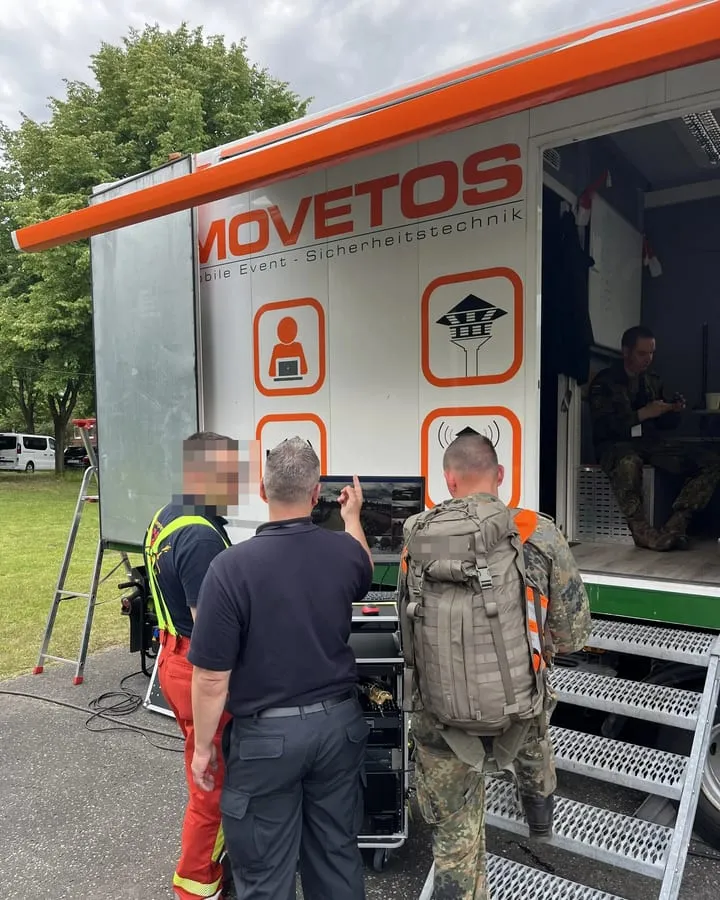
MOVETOS on site: situational picture on location. - Security management New
A digital planning environment makes coordination and decisions traceable
How a shared planning environment brings organisers, planners, authorities and operational staff to one information state – with prerequisites and limits.
Read - Security management New
Event security is more than a cost factor
Security can rarely be tied to extra revenue, but it safeguards event operations and limits the economic consequences of interruptions.
Read - Security management New
Interactive digital security planning makes connections between measures editable
What an interactive planning environment changes compared with document storage: five possibilities from site planning to reuse – and their limits.
Read - Safety management New
Organisational handover of an event site: what it clarifies and what it does not
The handover establishes condition, operational readiness and responsibilities. It does not automatically transfer all legal responsibilities.
Read - Safety management New
Prerequisites before visitor operations of an event begin
Before admission, the legal requirements must be met and the safety measures must actually be operational. A permit alone is not enough.
Read - Security management New
Feeling safe is not proof of safety
Why visitors' sense of safety is not a reliable proof of an event's actual safety – and how the quality of a security organisation should be judged.
Read - Security management New
More security staff does not automatically mean more security
Why the number of security personnel alone says little about an event's security performance – and what matters besides headcount.
Read - Security management New
Acceptance of an open-air event and responsibility during operation
What is checked in the acceptance of an open-air event? And what safety responsibility remains during live operation?
Read - Security management New
Staying able to act when the control room fails
When the control room fails: prioritise tasks, prepare fallback operation and test the changeover for information, communication and responsibility.
Read - Security management New
From a detected anomaly to a coordinated response
How clear reports, responsibilities, task assignments and feedback turn detected anomalies into coordinated measures.
Read - Security management New
Preserving security knowledge at a shift handover
How a prepared handover, conversation combined with documentation and a secured takeover carry the current security status across a shift change.
Read - Security management
Commissioning safety planning: which competences are needed for which tasks
Which competences safety planning requires: classifying qualifications, checking relevant experience and clearly agreeing services and professional limits.
Read - Security management
From security concept to working event operations
How a security concept becomes working procedures: assigning tasks, testing communication and checking implementation during the event.
Read - Security management
Reviewing security measures and learning from experience
How event experience leads to better security measures: recording observations, reviewing procedures and following improvements through to implementation.
Read - Security management
Turning protection goals into security requirements
How protection goals become verifiable requirements: clarifying the protective task, defining operating conditions and planning suitable evidence of performance.
Read - Security management
What security information mayors need for their decisions
What information municipal decision-makers need on security matters: protection goals, open points, options for action and traceable recommendations.
Read - Security infrastructure
Measuring security quality: why functions matter more than equipment
The number of cameras, loudspeakers or security staff says little about how reliably a security concept works. What matters is demonstrable performance.
Read - Security infrastructure
Technology, organisation and people: how security becomes effective
Modern security comes from technical systems, organisational processes and human decisions working together in a coordinated way.
Read
Security infrastructure
Integration, standardisation, modularity and availability of security technology.
-
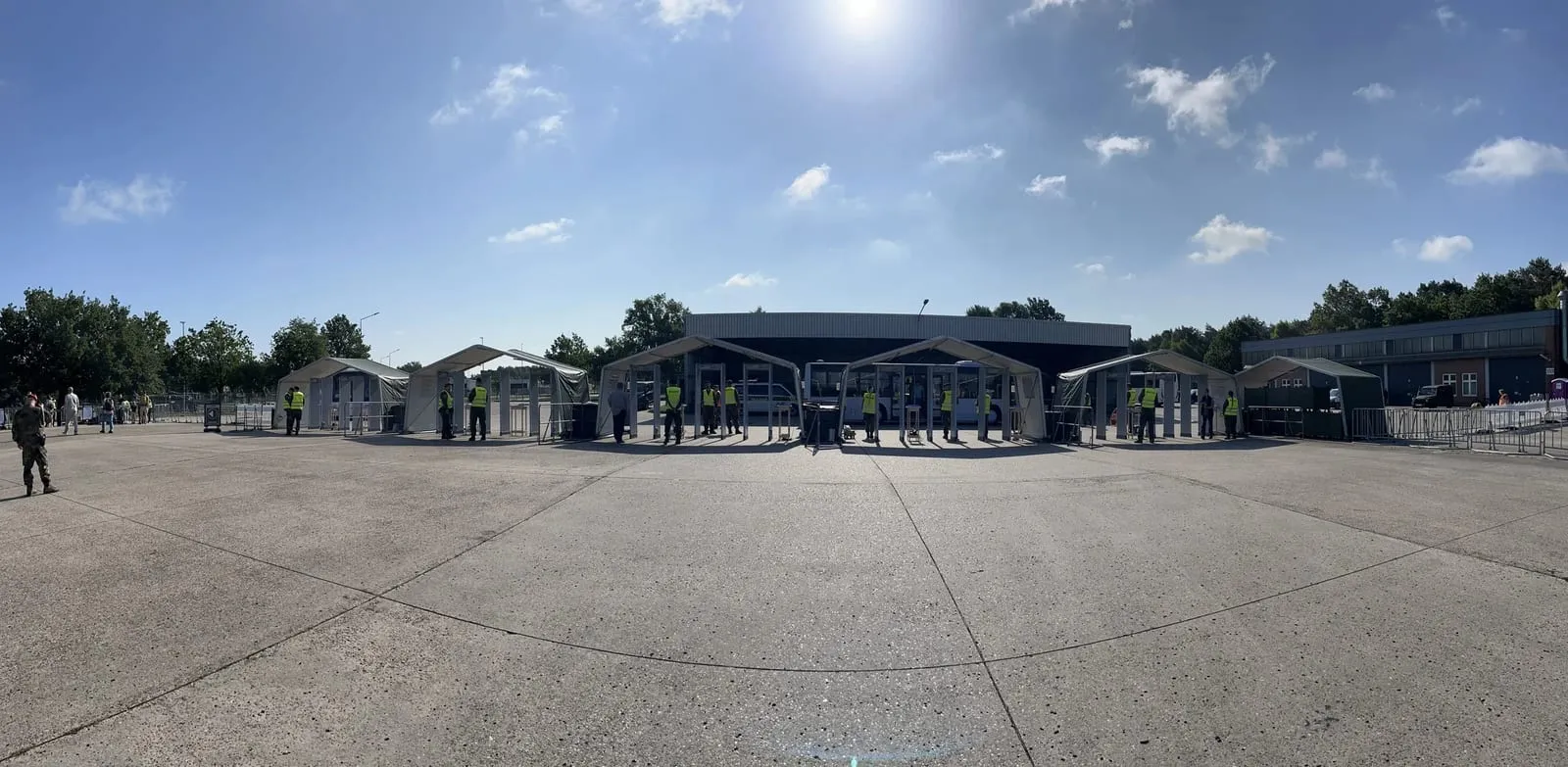
Mobile access points: several tent walkways side by side. - Security infrastructure New
Parking spaces alone do not determine how well a temporary car park performs
Why the number of spaces does not decide how a temporary car park performs, but inflow, outflow, queuing space and traffic routing – four parameters and a worked example.
Read - Security infrastructure New
Hostile vehicle mitigation and necessary vehicle access
How authorised vehicles pass vehicle barriers in a controlled way: clarify access needs, plan every opening as a procedure, test emergency access.
Read - Security infrastructure
Assessing event technology for safety tasks
When event technology can take on safety tasks: checking protective function, coverage, operation, power supply and suitable evidence.
Read - Security infrastructure
Integrated security infrastructure, not isolated measures
Why the interplay of technology, organisation and people determines how effective a modern security concept is – with criteria for assessing it.
Read - Security infrastructure
Standardisation and availability: how security infrastructure works reliably
Different sites require individual security concepts. The technical functions they need, however, are often comparable.
Read - Security infrastructure
Why individual security measures do not yet make a security infrastructure
Cameras, security staff and communication systems all do important work. What determines their effectiveness, however, is how they work together.
Read - Resilience
Security technology that works through power and network failures
Power cuts, overloaded mobile networks, sudden crowd shifts: what resilient security technology must deliver – with checks for planning and acceptance.
Read
Digital security & situational awareness
Video analytics, AI, visitor counting and incident command.
-
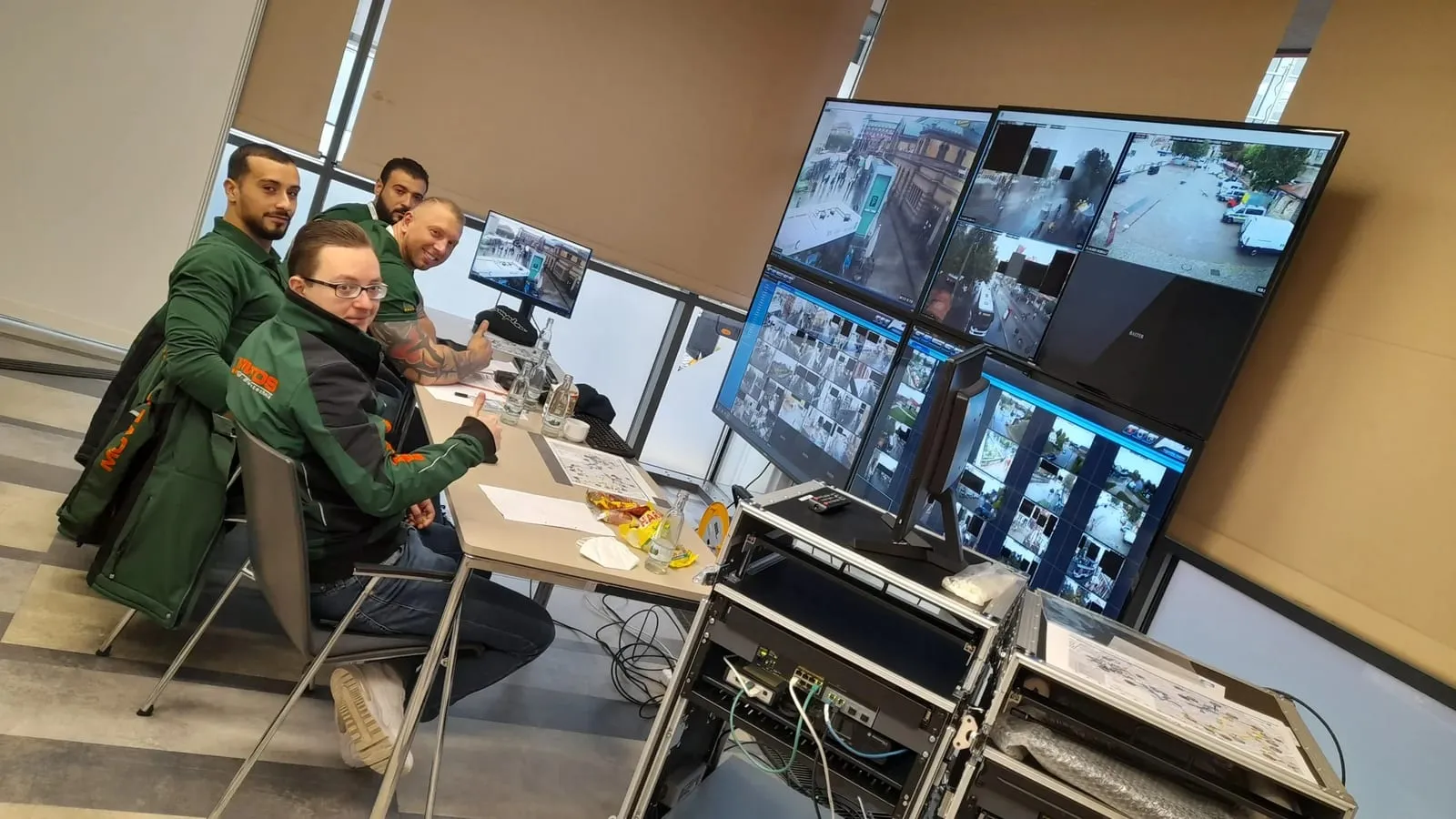
MOVETOS on site: camera images and situation on a monitor wall. - Situational awareness New
A real-time operational picture can show a false situation even when the technology works
Why a technically working real-time operational picture can show an incomplete or misleading security situation, and what matters here.
Read - Situational awareness New
A security plan can become invalid without the total visitor number being exceeded
Why a security plan can lose its validity before the total visitor number is reached – and which three questions guide the target-actual comparison.
Read - Situational awareness New
No incident is not yet proof of quality
Why the absence of a security incident does not prove event security quality – and what can be checked on detection, response, implementation and effect.
Read - Situational awareness New
Ordered does not mean implemented: verifying security measures
How organisers check whether an ordered security measure has been implemented and is effective – and why a status message is not yet a verified result.
Read - Situational awareness New
Situational information during an operation: planning recipients and access
How organisers plan recipients, access rights and workstations for a digital operational picture and check its usability before the operation.
Read - Visitor counting
Counting visitors with cameras: the current number on site
Counting at entrances or measuring density in areas? How cameras capture visitors, where accuracy ends and why no video needs to be stored.
Read - Situational awareness
Situational awareness at events: more than a video wall
What a live operational picture needs – density per area, trends, emergency access, announcement reach, team, alerts – and why camera feeds fall short.
Read
Safety communication
Warning, public address, radio and alerting.
-

Preparing and recording announcements. - Safety communication New
What errors occur in safety announcements and what are the consequences?
Unintelligible, too long, unclear: typical errors can make safety announcements ineffective. How an announcement should be structured.
Read - Safety communication New
When may TTS and AI voice systems deliver safety announcements?
Automated speech output can standardise safety announcements if content, triggering and availability are controlled. The decision stays with people.
Read - Safety communication New
Whoever makes safety announcements does not have to be a professional announcer
Not the job title, but clear speech, command of the equipment and resilience count. Five prerequisites for people who make safety announcements.
Read - Safety communication New
Reaching visitors with different communication needs with safety information
How announcements, visual notices and personal support work together so that visitors perceive and understand safety information.
Read - Safety communication
Public address infrastructure for both service and safety
How suitable public address infrastructure supports visitor service and safety communication, and what matters for planning and cost-effectiveness.
Read - Safety communication
Starting visitor communication before an emergency
Why visitors should get to know an event's information channels early and how helpful announcements can prepare safety communication.
Read - Announcements
Emergency PA at events: intelligible, multilingual and resilient
How to make public announcements at events understood: speech intelligibility (STI), sound levels, loudspeaker zones, languages, prepared messages and offline operation.
Read
Event safety & crowd management
Visitor flows, event planning and hostile vehicle mitigation.
-
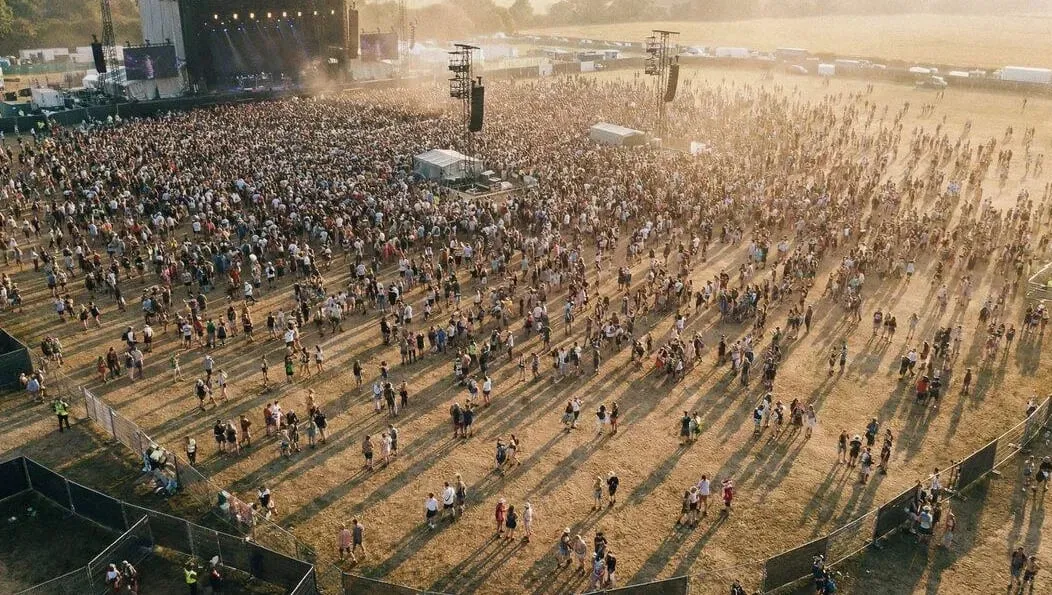
The crowd from the air: visitor density at a glance. - Crowd management New
Preparing decisions about interrupting an event
How traceable criteria, clear authority and workable options prepare decisions about interrupting an event and resuming it.
Read - Vehicle security
Hostile vehicle mitigation for events: planning barriers
Where vehicles can reach a site, which standards apply to barriers and why every access point needs its own calculation – a guide for event organisers.
Read - Case study
Case study: a 1.2 km family festival without cables
Case study of the Rhein-Kreis Neuss family festival at Schloss Dyck: 25,000 visitors, 1.2 km site, no cables – live picture, announcements, night watch.
Read - Markets and fairs
Christmas market safety: reassessing markets and fairs
Traditional events, new demands: many entrances, bottlenecks, rides with their own music, evening hours – and cable-free announcements and live monitoring.
Read - Crowd management
Crowd density at events: basics and warning levels
People per m², Fruin's Level of Service, sensible warning levels and how cameras can measure density – the essentials for organisers and authorities.
Read - Parking
Event parking: sizing and checking capacity
Bays, aisles, fire access, entrances and queuing space: how to size parking next to an event – and check whether it will be enough.
Read - Planning
Planning cameras, loudspeakers and radio links on site
How to position mobile security technology well: coverage, sight lines, public address, cable-free radio links, control room and budget – calculated transparently.
Read
Corporate security & critical infrastructure
Temporary protection and security continuity for companies and critical infrastructure.
-
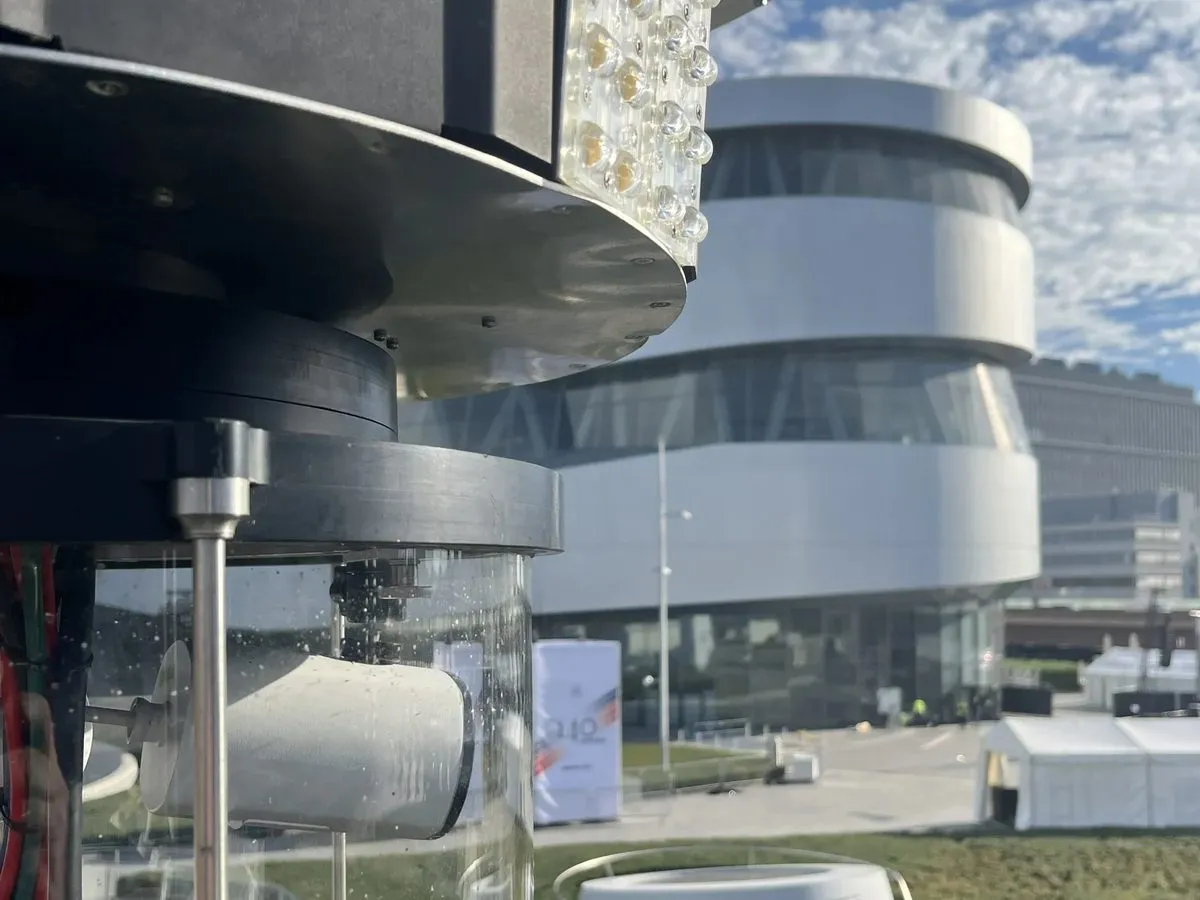
Technology in use. - Critical infrastructure New
Demonstrating the suitability of temporary security measures
How operators define test criteria before deploying temporary protection measures, test the entire functional chain and document results and limits of use.
Read - Critical infrastructure New
KRITIS requirements for temporary protection measures
How operators take KRITIS requirements into account during conversions and maintenance and integrate temporary protection measures into security management.
Read - Critical infrastructure New
Preparing a temporary replacement solution for an unplanned outage
How operators clarify protection needs, provision time, call-off and handover of a temporary replacement before an unplanned outage and test it.
Read - Critical infrastructure
What critical infrastructure operators can learn from event security
Which event security methods can help with temporary protection tasks: planning operating states, clarifying interfaces and checking readiness.
Read - Critical infrastructure
Germany’s KRITIS Umbrella Act: physical protection explained
What Germany’s KRITIS Umbrella Act requires for physical protection: registration, deadlines, resilience plan, site security and incident reporting – plus Austria.
Read - Perimeter protection
Mobile site surveillance: off-grid CCTV for construction sites
Protecting construction sites and properties without power or network: mobile camera towers, perimeters, lighting, loudspeakers and data protection.
Read
Law, standards & procurement
Regulations, specifications and evidence.
-

Symbolic image: regulations and costs in balance. - Law, standards & procurement New
Acceptance protocols for events: requirements for legal robustness
A robust acceptance protocol documents the subject of inspection, the basis of inspection, findings, responsibilities, and the result and its legal effect.
Read - Law, standards & procurement New
Binding requirements and professional assessment in event security
What law and authorities fix as binding for event security, and where professionally justified planning begins.
Read - Law, standards & procurement New
Legal powers of the fire service in security planning
The fire service has statutory tasks in fire protection, but no general authority to decide on all security measures of an event.
Read - Standards & regulations New
Permanent venues and temporary events fall under different areas of law
Permanent assembly venues and temporary events in public space have different regulatory subjects – not lower safety requirements.
Read - Law, standards & procurement New
Roles and powers of medical services at events
Medical services provide planned first-line care at events. This does not give them general responsibility for event safety.
Read - Law, standards & procurement New
Safety regulations for open-air events and events in public space
Which rules apply to open-air events and events in public space depends on the site, its structural design and the type of use.
Read - Law, standards & procurement New
The 5,000-visitor threshold is a legal reference figure, not a general limit
The 5,000 threshold has a specific legal scope, but it is not a general limit for event safety.
Read - Law, standards & procurement New
The municipal permitting authority decides on safety conditions, the organiser remains responsible for safe operation
The permitting authority decides on the permit and safety conditions but does not take over the organiser's operational safety responsibility.
Read - Law, standards & procurement New
The police contribute to security planning but do not grant permits or bear overall responsibility
The police may be involved and can order measures within hazard prevention, but take over neither the permit nor overall responsibility.
Read - Responsibility & liability New
Sponsorship and responsibility for event security
What legal and corporate responsibility do sponsors have for event security? A professional assessment.
Read - Procurement New
Agreeing rules on the use and handover of security data in advance
How clients clarify before commissioning which security data is generated, who may use and export it, and what happens when the contract ends.
Read - Procurement New
Comparing security offers by what they deliver
How clients compare security offers traceably by protection function, operability, scope of services, evidence and total effort.
Read - Procurement New
Security decisions to settle before requesting quotations
How clients clarify needs, users and alternative solutions early on, laying the groundwork for suitable security procurement.
Read - Standards & regulations
Common safety standards for events in Germany and Europe
European standards, state law and guidance: which foundations events share and how their significance for safety can be assessed.
Read - Insurance
Insurance obligations during temporary protection gaps
Which notifications and precautions may matter when protective systems are switched off, and why the specific insurance contract is decisive.
Read - Responsibility & liability
Organiser responsibility when contractors take on security tasks
Which duties event organisers should observe when contracting out security tasks, and how civil liability differs from personal criminal responsibility.
Read - AI and law
AI cameras at events: what the EU AI Act allows
Counting people, measuring density, monitoring restricted areas: what the EU AI Act prohibits, what counts as high-risk and what the GDPR also requires.
Read - Standards & regulations
Event safety plans: standards for monitoring, alerts and PA
Which rules apply to crowd density, evacuation, public address and record-keeping at events – and what they mean for the technology you deploy.
Read - Procurement
Procuring security technology: function first, then devices
Why individual cameras and loudspeakers do not add up to security infrastructure – and how to set functions, requirements and evidence for a contract.
Read